
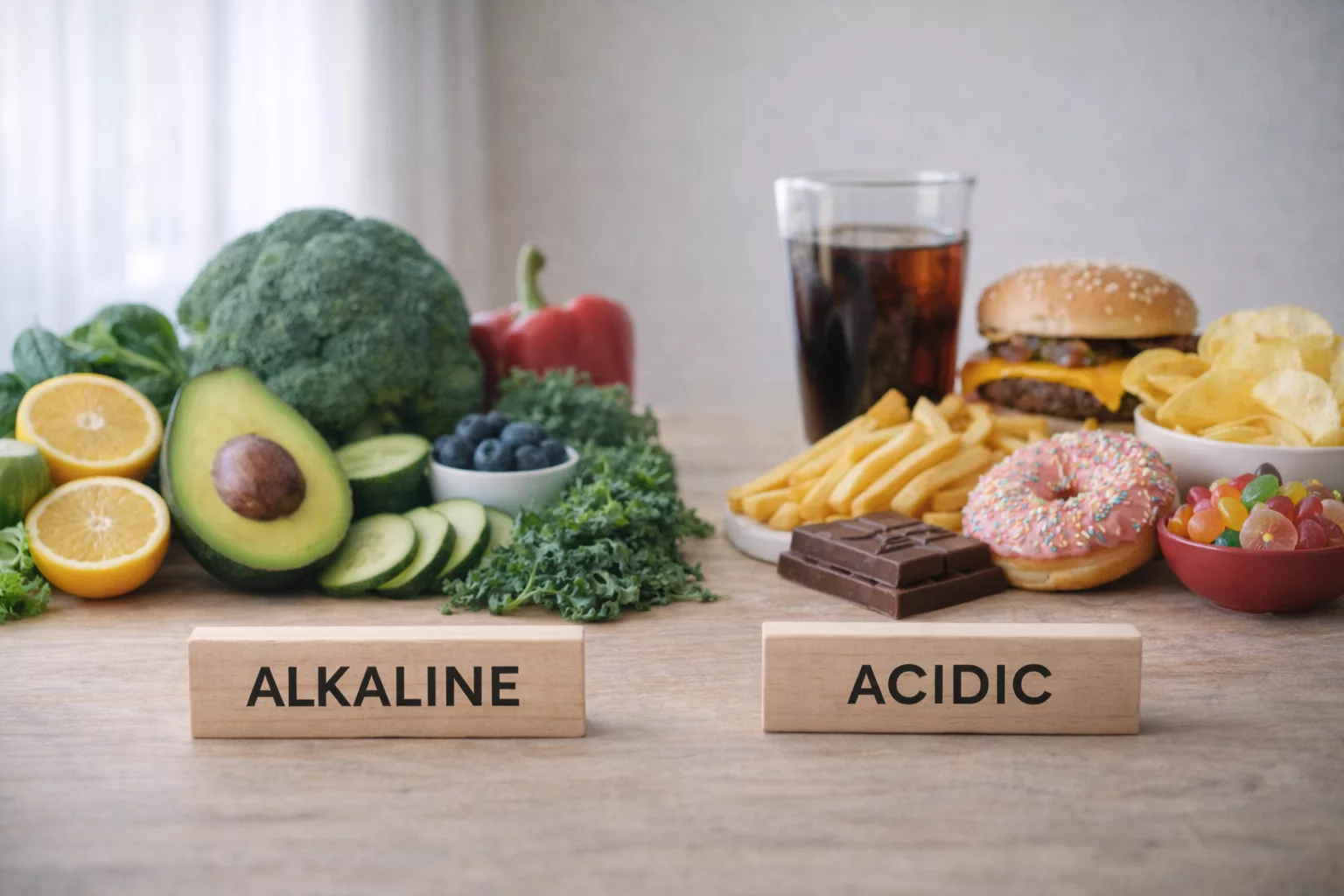
Choosing what to put on your plate is an act that goes far beyond simply satisfying hunger. Every food, once metabolized, leaves a chemical imprint in the body that can be predominantly acidic or alkaline. Understanding this distinction and learning to guide your food choices accordingly represents a powerful tool for daily health.
How to classify a food
The acid-alkaline classification of foods is not based on the taste or the pH of the raw food, but on the mineral residue that remains after digestion and metabolism. Foods rich in minerals such as potassium, magnesium, calcium, and organic sodium leave an alkaline residue. Those rich in phosphorus, sulfur, and chlorine leave an acidic residue.
This is why lemon, despite its sour taste, is one of the most alkalizing foods: once metabolized, it releases minerals that alkalize the tissues. Conversely, meat, while not having an acidic taste, produces abundant acidic residues during its metabolism.
The main alkalizing foods
The large family of alkalizing foods is dominated by the plant world:
Vegetables (strongly alkalizing)
- Spinach, kale, chard, arugula
- Cucumbers, celery, fennel
- Zucchini, broccoli, cauliflower
- Carrots, beets
- Potatoes and sweet potatoes
- Bell peppers, tomatoes
Fruits
- Lemons and limes (the most alkalizing)
- Watermelon, melon
- Apples, pears
- Avocado
- Ripe bananas
- Berry fruits
Other alkalizing foods
- Almonds (the only strongly alkalizing nut)
- Pumpkin and sesame seeds
- Fresh herbs: parsley, basil, coriander
- Spices: turmeric, ginger, cinnamon
- Green tea and herbal teas
The main acidifying foods
This is not about eliminating these foods, but about understanding their impact and balancing it appropriately:
Strongly acidifying
- White sugar and industrial sweets
- Sugary and carbonated drinks
- Refined flours (white bread, white pasta, baked goods)
- Red meats and processed meats
- Alcohol, especially spirits
- Ultra-processed foods and fast food
Moderately acidifying
- Aged cheeses
- Eggs
- Fish and white meats
- Legumes (slightly acidifying but rich in benefits)
- Whole grains (acidifying but much less than refined ones)
- Coffee
- Dried fruits (except almonds)
The 80/20 rule
A practical and sustainable approach to alkalizing nutrition does not require the elimination of acidifying foods, but rather adherence to a proportion: about 80% of the plate should consist of alkalizing foods (mainly vegetables) and 20% of acidifying foods (proteins, grains).
This balance allows for a varied and enjoyable diet, without extreme sacrifices, while providing the body with a surplus of alkaline minerals that support the maintenance of optimal tissue pH.
Practical tips for every meal
- Breakfast: fresh fruit, green smoothies with spinach and banana, oatmeal porridge with almonds and blueberries
- Lunch: a large mixed salad as a base, with a moderate portion of protein (fish, legumes, eggs) and whole grains
- Dinner: cooked and raw vegetables as the main focus, with a small protein portion. Avoid overly large meals in the evening
- Snacks: almonds, celery and carrot sticks, fresh fruit
- Drinks: lemon water in the morning, herbal teas throughout the day, reduce coffee to 1-2 cups
A gradual change
The transition to a more alkalizing diet does not have to be traumatic. The best advice is to proceed gradually: start by adding an extra portion of vegetables to each meal, then progressively replace packaged snacks with fruit and almonds, and then reduce portions of red meat while increasing fish and legumes. The palate adapts, the body responds, and within a few weeks, the benefits are felt: more energy, less bloating, brighter skin, lighter digestion, and an overall feeling of lightness and vitality.



Comments 3
comments.cta_title
comments.cta_text
comments.login_cta