

Brisk Walking: The Most Powerful Drug That Requires No Prescription
If there were a drug capable of reducing the risk of cardiovascular diseases by 30%, the risk of type 2 diabetes by 40%, the risk of colon and breast cancer by 20%, the risk of depression by 30%, and additionally improved sleep, weight, memory, and mood — it would be considered the drug of the century. That drug exists, it is free, has no side effects, and is called brisk walking.
Walking is the physical activity for which the human body was designed. For millions of years, our ancestors walked between 15 and 25 kilometers a day to hunt, gather, and move around. Our musculoskeletal system, cardiovascular system, and even the brain have evolved around movement. Modern sedentary behavior — spending 8-10 hours sitting in front of a screen — is a completely unnatural condition that our body is not designed to endure.
The Scientific Benefits of Brisk Walking
Heart and Cardiovascular System
Brisk walking is one of the most studied exercises for cardiovascular health. Walking at a steady pace for 30-45 minutes a day reduces systolic blood pressure by 5-10 mmHg, improves the lipid profile (increases HDL good cholesterol and reduces triglycerides), lowers resting heart rate, and improves arterial elasticity.
A large study published in the British Medical Journal showed that brisk walking reduces the risk of mortality from cardiovascular causes by 24% compared to sedentary behavior, and that even just 11 minutes of brisk walking a day produces significant benefits. Speed matters more than distance: walking at a steady pace (at least 5-6 km/h) is significantly more effective than a slow walk.
Brain and Cognitive Functions
Brisk walking is a powerful natural neurotropic. It increases the production of BDNF (Brain-Derived Neurotrophic Factor), a protein that stimulates the growth of new neurons and strengthens synaptic connections. This effect is particularly relevant for the hippocampus — the brain structure responsible for memory — which tends to decrease with age.
Neuroimaging studies have shown that people who walk regularly have a larger hippocampal volume compared to sedentary individuals, better performance on memory tests, and a 40% reduced risk of developing dementia. Walking outdoors, in particular, combines the benefits of exercise with exposure to natural light and nature, enhancing cognitive effects.
Mood and Mental Health
Walking stimulates the production of endorphins (the body's natural opioids), serotonin (the well-being neurotransmitter), and dopamine (the motivation neurotransmitter). Several clinical studies have shown that regular brisk walking has an antidepressant effect comparable to that of SSRI medications in cases of mild to moderate depression, without side effects.
Walking in nature (the so-called green exercise) is particularly effective: it reduces cortisol levels, lowers blood pressure, and improves self-esteem and mood more than the same activity performed in urban or indoor environments.
Body Weight and Metabolism
Brisk walking is primarily an aerobic activity that uses fat as the main source of energy. At a moderate intensity (60-70% of maximum heart rate), the percentage of fat burned during exercise is maximized. A brisk walk of 45 minutes burns about 250-350 calories depending on body weight and speed.
But the metabolic benefits go beyond the calories burned during exercise. Regular walking improves insulin sensitivity, promotes the mobilization of visceral fat (the most dangerous for health), increases basal metabolism, and reduces appetite for high-calorie foods. It is the ideal exercise for those who want to lose weight sustainably without the risk of injuries associated with more intense activities.
Bones and Joints
Unlike running, walking is a low-impact activity that positively stimulates bone density without overloading the joints. Each step produces a force equal to about 1.2 times body weight (compared to 2.5-3 times for running), sufficient to stimulate the formation of new bone tissue but insufficient to damage cartilage and ligaments.
For people with osteoarthritis, overweight, back, or knee problems, brisk walking is often the only aerobic activity that can be performed without pain. And contrary to popular belief, moderate movement improves osteoarthritis by reducing joint stiffness and strengthening stabilizing muscles.
Brisk Walking vs Running: The Comparison
Many people believe that running is inherently superior to walking as a form of exercise. In reality, for most people, brisk walking offers a better benefit/risk ratio:
Injury risk: runners have an injury rate of 20-80% per year (tendinitis, plantar fasciitis, iliotibial band syndrome, stress fractures). Walkers have an injury rate of less than 5%.
Long-term sustainability: walking can be practiced for a lifetime, even in old age. Many people who start running drop out within the first year due to injuries or excessive fatigue.
Cardiovascular benefits: for the same energy expenditure, brisk walking and running produce comparable cardiovascular benefits. Walking briskly for 45 minutes is equivalent, in terms of heart benefits, to running for 25-30 minutes at a moderate pace.
Fat burning: brisk walking burns a higher percentage of fat compared to running, which primarily uses glucose. For body fat loss, walking longer at moderate intensity is often more effective than running fast for a short time.
The Correct Technique for Brisk Walking
Walking briskly does not simply mean walking with faster leg movements. Good technique improves efficiency, reduces the risk of pain, and increases benefits:
Posture: straight back, looking forward (not down), relaxed shoulders slightly back, abdomen slightly contracted. Imagine a string pulling you up from the top of your head.
Arms: bent at 90 degrees, swinging naturally in alternation with the legs. The movement starts from the shoulders. Hands are relaxed, not clenched into fists. Arm swinging increases speed and intensity of the exercise.
Feet: heel-to-toe landing, with a smooth roll from heel to toe. The foot pushing behind provides propulsion for the next step. More frequent steps (not longer) increase speed.
Breathing: nasal if possible, rhythmic and coordinated with steps. A good rule: if you can talk but not sing, you are at the right intensity.
Weekly Program for Beginners
Weeks 1-2: 20 minutes a day, 5 days a week, at a moderate pace. The goal is to create the habit.
Weeks 3-4: 30 minutes a day, 5 days a week, alternating 3 minutes of brisk walking with 2 minutes of moderate walking.
Weeks 5-6: 35 minutes a day, alternating 5 minutes of brisk walking with 2 minutes of moderate walking.
Weeks 7-8: 40-45 minutes a day, predominantly at a brisk pace with recovery breaks at a moderate pace when necessary.
Maintenance: 45 minutes, 5-6 times a week, at a brisk pace (5.5-6.5 km/h). Two sessions a week can include variations in terrain (hills, stairs, trails) to increase intensity.
Practical Tips to Make Walking a Habit
Choose a fixed time. Early morning is ideal: natural light synchronizes the circadian rhythm, the air is cleaner, and excuses for the day are eliminated. But any time is fine, as long as it is consistent.
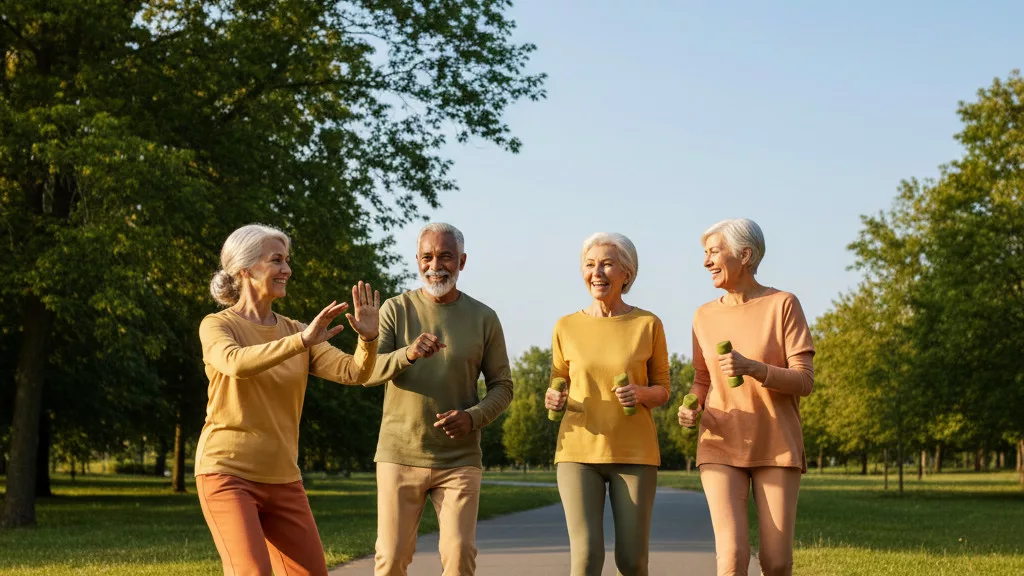
Walk with someone. A walking companion makes the activity more enjoyable and creates a social commitment that increases consistency. A dog is also a great motivator.
Use technology. A pedometer or smartwatch can provide motivation through quantifiable goals. The goal of 10,000 steps a day — although arbitrary — is a good benchmark.
Integrate walking into your routine. Park farther away, get off the bus one stop early, make phone calls while walking, choose stairs instead of the elevator. These small changes can add 2,000-3,000 steps a day without perceived effort.
Invest in good shoes. The only truly necessary equipment is a pair of walking shoes with good cushioning and support. Inadequate shoes can cause blisters, plantar pain, and postural problems.
Brisk walking is the most democratic, accessible, and sustainable exercise there is. It requires no gym memberships, expensive equipment, special athletic skills, or a starting physical condition. It only requires the decision to put one foot in front of the other, every day.


Comments 4
comments.cta_title
comments.cta_text
comments.login_cta