
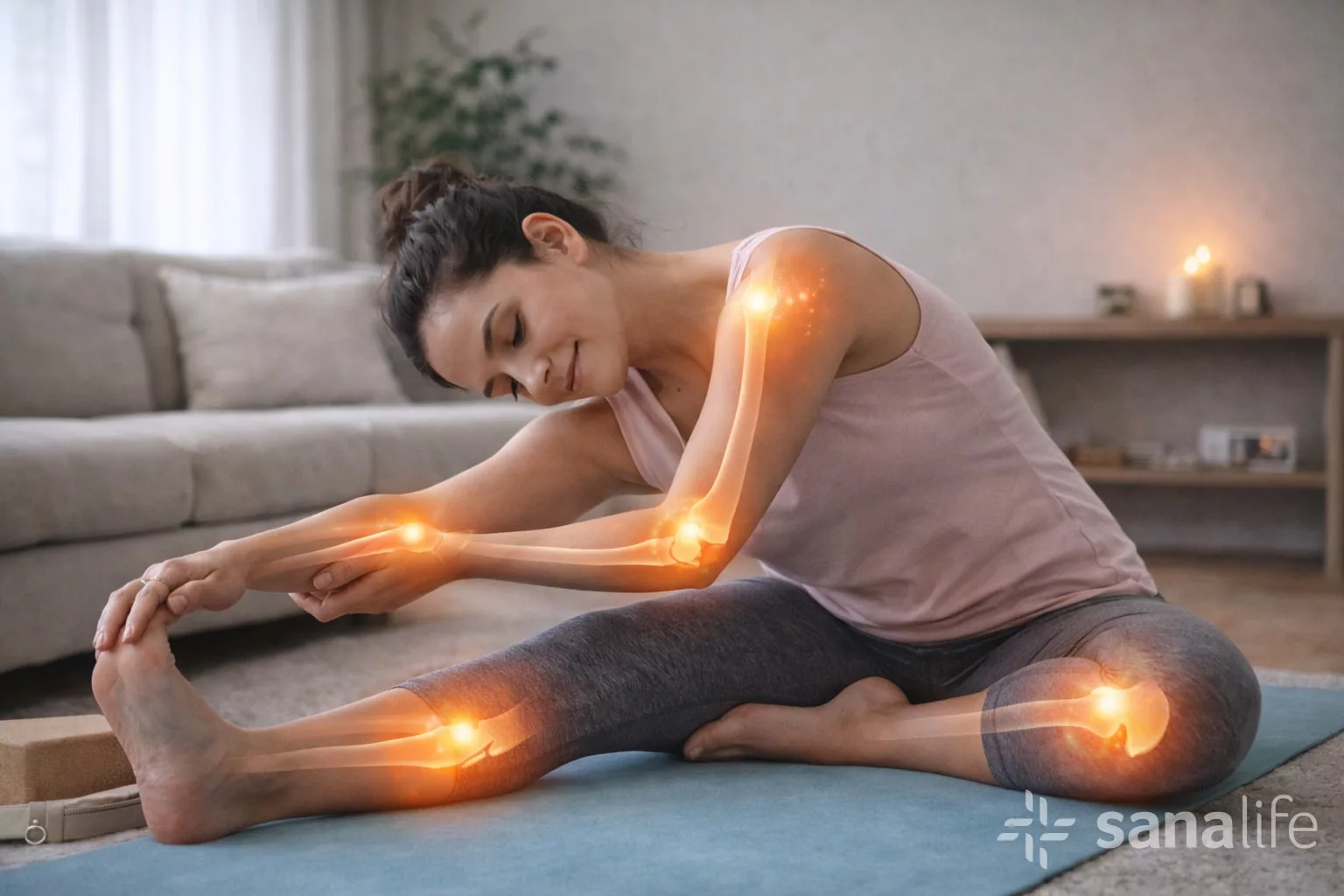
Stretching and Mobility: Why Flexibility is Essential for Health
Flexibility is the forgotten capacity of fitness. While running, strength, and endurance receive great attention, joint mobility and stretching are often relegated to a marginal role — those hurried five minutes at the end of the workout that most people skip. Yet, flexibility is a fundamental component of musculoskeletal health and quality of life, especially as we age.
As the years go by, connective tissues — tendons, ligaments, muscle fascia — progressively lose elasticity and hydration. Collagen fibers shorten and stiffen, joints produce less synovial fluid, and muscles that are not regularly stretched develop retractions and points of chronic tension. The result is an increasingly rigid body, with limited movements, compensatory postures, and a growing risk of pain and injuries.
But the good news is that flexibility can be improved at any age. Connective tissue responds to the stimulus of stretching by adapting and elongating, muscles regain their optimal length, and joints recover their range of motion. You don’t need to become a contortionist: just a regular routine of 15-20 minutes a day can yield significant benefits.
Static, Dynamic, and PNF Stretching: The Differences
Static Stretching
Static stretching involves bringing a muscle to its maximum stretch position and holding it for 20-45 seconds, breathing deeply. It is the most well-known and practiced form of stretching, ideal for post-workout cool down and dedicated flexibility sessions.
Static stretching activates the inverse myotatic reflex: after about 15-20 seconds of sustained stretching, the Golgi tendon organs send a relaxation signal to the muscle, allowing for further elongation. This is why positions should be held for at least 20 seconds — shorter times are not sufficient to trigger this neurological mechanism.
Note: static stretching before physical activity (when cold) is not recommended. Several studies have shown that pre-workout static stretching can temporarily reduce muscle strength and explosive power. It’s better reserved for afterwards.
Dynamic Stretching
Dynamic stretching consists of controlled and repetitive movements that progressively take joints and muscles through their entire range of motion. Leg swings, torso rotations, arm circumductions, walking lunges — these are all examples of dynamic stretching.
This type of stretching is ideal as a warm-up before physical activity because it increases muscle temperature, improves joint lubrication, and prepares the neuromuscular system for movement without reducing strength. Each movement is repeated 10-15 times, gradually increasing the range.
PNF Stretching (Proprioceptive Neuromuscular Facilitation)
PNF stretching is the most advanced and effective technique for improving flexibility. It combines passive stretching with isometric contractions of the target muscle. The classic protocol involves: passive stretching of the muscle for 10 seconds → isometric contraction of the stretched muscle for 6 seconds (push against resistance without moving) → relaxation and further stretching for 15-20 seconds.
The isometric contraction activates a mechanism of reciprocal inhibition that allows for significantly greater elongation compared to traditional static stretching. PNF stretching is particularly effective for unlocking chronic muscle retractions but often requires a partner or the use of tools (straps, bands) for resistance.
Joint Mobility: Beyond Muscle Stretching
Joint mobility is a broader concept than stretching. While stretching focuses on elongating muscles, joint mobility concerns the ability of the joint to move through its full range with control and stability. A person can have flexible muscles but limited joint mobility (if neuromuscular control is lacking), or hypermobile joints but stiff muscles.
Mobility work includes: circular movements of each joint (ankles, knees, hips, spine, shoulders, wrists, neck), motor control exercises at the extremes of the joint range, and activities that improve proprioception (awareness of body position in space).
Scientific Benefits of Regular Stretching
Reduction of chronic pain: regular stretching is one of the most effective interventions for chronic back pain, neck pain, and tension headaches. Chronically contracted muscles develop trigger points (painful knots) that radiate pain distally; stretching helps to release these tension points.
Improvement of posture: muscle stiffness is one of the main causes of poor posture. Shortened pectorals pull the shoulders forward (kyphosis), contracted hip flexors tilt the pelvis (lumbar lordosis), and tight hamstrings limit pelvic mobility. Targeted stretching can correct these imbalances.
Reduction of injury risk: flexible muscles and mobile joints absorb sudden forces better, reducing the risk of strains, sprains, and tears. Flexibility is particularly protective in sports that require quick movements and changes of direction.
Improvement of circulation: stretching improves blood flow to muscles and connective tissues, facilitating nutrient delivery and metabolite removal. This effect is particularly beneficial for those who spend many hours sitting.
Reduction of stress: slow and mindful stretching activates the parasympathetic nervous system, reducing cortisol, heart rate, and muscle tension. It combines the physical benefits of stretching with the psychological benefits of mindfulness.
Morning Stretching Routine (15 minutes)
A morning stretching routine is an excellent way to start the day. It gradually awakens the body, improves circulation, and prevents stiffness accumulated overnight.
1. Cat-Cow — 1 minute. On all fours, alternate rounding the back upwards (cat) with arching downwards (cow), coordinating the movement with your breath. Mobilizes the entire spine.
2. Hip Flexor Stretch — 1 minute per side. In a lunge position with one knee on the ground, push the pelvis forward feeling the stretch in the front of the thigh and hip. Essential for those who sit for many hours.
3. Hamstring Stretch — 1 minute per side. Lying on your back, raise one leg straight up while keeping the other on the ground. Use a strap or towel around the foot if you can’t reach the ankle.
4. Torso Rotation — 1 minute per side. Sitting cross-legged, rotate the torso to the right resting the left hand on the right knee. Keep your back straight. Repeat on the other side.
5. Chest Opener — 1 minute. Lying on a foam roller positioned lengthwise under the spine, let your arms fall open to the sides. Opens the chest and combats kyphosis.
6. Piriformis Stretch — 1 minute per side. Lying on your back, cross one ankle over the opposite knee and pull the lower thigh towards your chest. Relieves tension in the gluteal area and may reduce sciatica.
7. Lateral Neck Stretch — 30 seconds per side. Gently tilt your ear towards your shoulder, without raising the opposite shoulder. Releases cervical tension accumulated during sleep.
8. Calf Stretch — 30 seconds per side. Standing with hands on the wall, step one foot back with the heel on the ground and the leg straight. Feel the stretch in the calf.
Common Mistakes to Avoid
Bouncing. Bouncing movements during static stretching activate the myotatic reflex (the muscle contracts to protect itself from tearing), achieving the opposite effect desired. Keep positions stable and relaxed.
Holding your breath. Deep and slow breathing is essential for muscle relaxation. Inhale during preparation, exhale slowly during stretching. Breath is your best ally in stretching.
Forcing pain. Stretching should produce a sensation of comfortable tension, never sharp pain. If you feel joint pain, tingling, or sharpness, you are going too far. Flexibility is gained through consistency, not force.
Skipping warm-up. Static stretching on cold muscles is less effective and riskier. Before a dedicated stretching session, do at least 5 minutes of light movement (walking, marching in place) to raise muscle temperature.
Being inconsistent. Gains in flexibility require regularity. Intense stretching once a week is much less effective than 10-15 minutes every day. Consistency is key.
Flexibility is an investment in your future: a flexible body is a body that moves easily, resists injuries, and maintains its autonomy over time. Just 15 minutes a day can make a difference.



Comments 3
comments.cta_title
comments.cta_text
comments.login_cta