

Vitamin D: Why It Is Considered the Most Important Supplement
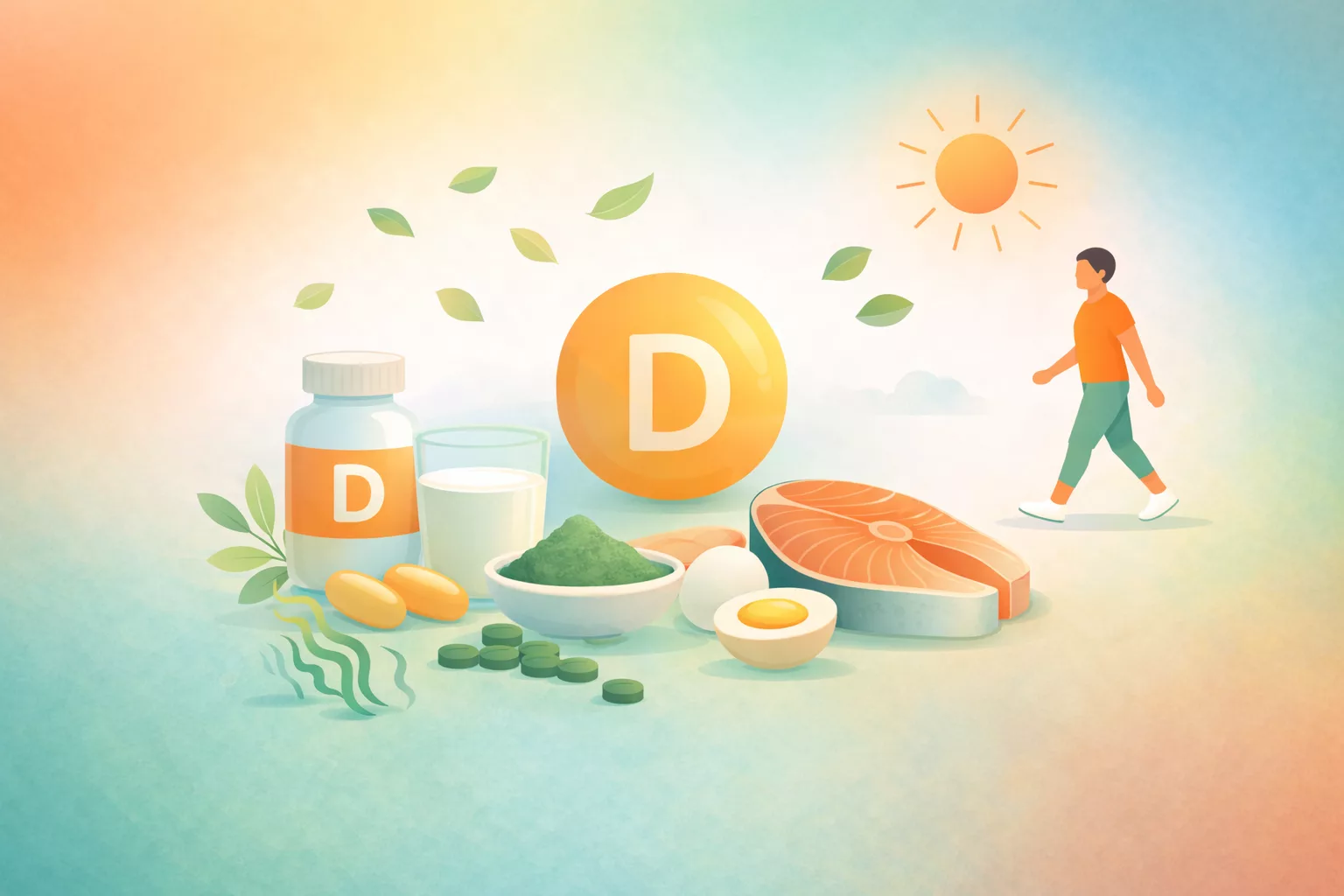
Vitamin D is a unique nutrient in the landscape of dietary supplements. Unlike other vitamins, our body can produce it on its own through exposure to sunlight, but modern life — with long hours spent indoors, the use of sunscreen, and the latitude of European countries — has made vitamin D deficiency an epidemic problem. According to data from the Italian National Institute of Health, over 70% of the Italian population has insufficient levels of this vitamin, especially during the winter months.
Scientific research over the past two decades has revolutionized our understanding of vitamin D, revealing that it is not simply a vitamin for bones, but a true hormone that influences almost every tissue in the human body. From the immune system to mental health, from cancer prevention to muscle metabolism, its effects are broad and profound.
What Is Vitamin D and How Does It Work in the Body
Vitamin D exists in two main forms: vitamin D2 (ergocalciferol), of plant origin, and vitamin D3 (cholecalciferol), produced by human skin and found in animal-derived foods. D3 is considered the most effective and bioavailable form.
When ultraviolet B (UVB) light hits the skin, 7-dehydrocholesterol is converted into previtamin D3, which then transforms into vitamin D3. This is transported to the liver where it becomes 25-hydroxyvitamin D (calcidiol), the form measured in blood tests. Finally, in the kidneys, it is converted into the active form, calcitriol (1,25-dihydroxyvitamin D), which acts as a steroid hormone by binding to receptors present in almost all cells of the body.
Scientifically Proven Benefits of Vitamin D
Bone Health and Osteoporosis Prevention
Vitamin D is essential for calcium absorption in the intestine. Without adequate levels, the body absorbs only 10-15% of dietary calcium, compared to 30-40% under optimal conditions. Chronic deficiency leads to bone demineralization, osteomalacia in adults, and rickets in children. Clinical studies have shown that combined supplementation of vitamin D and calcium reduces the risk of fractures by 15-30% in the elderly.
Immune System and Natural Defenses
Vitamin D modulates both innate and adaptive immunity. It stimulates the production of antimicrobial peptides such as cathelicidins and defensins, which act as natural antibiotics. Meta-analyses published in the British Medical Journal have confirmed that daily vitamin D supplementation reduces the risk of acute respiratory infections by 12%, with greater benefits in individuals with severe deficiency (up to 70% reduction).
Cardiovascular Health
Adequate levels of vitamin D are associated with lower blood pressure, improved endothelial function, and reduced vascular inflammation. Large-scale observational studies have shown that individuals with 25(OH)D levels below 20 ng/ml have a 30-50% increased cardiovascular risk.
Mood and Mental Health
Vitamin D receptors are abundant in brain areas involved in mood regulation, including the hippocampus and prefrontal cortex. Several studies have linked low levels of vitamin D to an increased risk of depression. A 2020 meta-analysis involving over 7,500 participants showed that vitamin D supplementation has a significant positive effect on depressive symptoms, particularly in those with documented deficiency.
Muscle Function and Sports Performance
Vitamin D directly influences muscle protein synthesis and the function of type II muscle fibers (fast-twitch fibers). Athletes with optimal levels show better strength, reaction speed, and reduced injury risk. In the elderly, supplementation reduces the risk of falls by 19%.
Symptoms of Vitamin D Deficiency
Vitamin D deficiency is often insidious and manifests gradually. The most common symptoms include:
Persistent fatigue and tiredness: one of the most frequent signs, often mistakenly attributed to stress. Vitamin D is involved in cellular energy production, and its deficiency slows mitochondrial metabolism.
Widespread muscle and bone pain: vague and widespread pain, often confused with fibromyalgia or chronic fatigue syndrome. Severe deficiency causes osteomalacia with deep bone pain, especially in the spine, pelvis, and legs.
Frequent infections: recurring colds, flu, and respiratory infections may signal an immune system compromised by vitamin D deficiency.
Depressed mood and irritability: the link between vitamin D and serotonin production explains why deficiency can negatively affect mood, especially during winter months (the so-called SAD — Seasonal Affective Disorder).
Slow wound healing: vitamin D is involved in tissue regeneration processes and the inflammatory response. Its deficiency significantly slows healing.
Dosage: How Much Vitamin D to Take Daily
The optimal dosage of vitamin D depends on baseline blood levels, age, and individual conditions. Current guidelines recommend:
Maintenance (normal blood levels, 30-50 ng/ml): 1,000-2,000 IU per day for adults. This dose is considered safe and sufficient to maintain adequate levels in most people.
Correction of deficiency (levels below 20 ng/ml): medical protocols recommend loading doses of 50,000 IU per week for 8-12 weeks, followed by a maintenance dose. This approach must be supervised by a doctor with monitoring of blood levels.
Elderly and at-risk individuals: 2,000-4,000 IU per day. With aging, the skin's ability to synthesize vitamin D decreases by up to 75%, making supplementation practically mandatory.
The upper safety limit established by EFSA (European Food Safety Authority) is 4,000 IU per day for adults, although many experts consider doses up to 10,000 IU per day safe in specific contexts.
How to Choose the Best Vitamin D Supplement
Form: D3 vs D2
Always prefer vitamin D3 (cholecalciferol). Comparative studies have shown that D3 is about 87% more effective than D2 in increasing and maintaining blood levels of 25(OH)D. D2 has a shorter half-life and lower affinity for transport proteins.
Formulation: Drops, Capsules, or Tablets
Oil drops represent the ideal formulation for vitamin D, being fat-soluble. The oil (usually olive oil or MCT) improves absorption by up to 50% compared to dry tablets. Softgel capsules in oil are an excellent alternative.
Combination with Vitamin K2
The combination of vitamin D3 + K2 (menaquinone-7) is considered the gold standard. Vitamin K2 directs calcium to the bones and teeth, preventing its deposition in arteries and soft tissues. This synergy is particularly important at high doses of vitamin D.
Certifications and Quality
Look for products with third-party analysis, GMP certifications, and that clearly state the amount of vitamin D per dose. Avoid products with unnecessary excipients, artificial colorings, or non-standardized doses.
When to Take Vitamin D
Being fat-soluble, vitamin D is better absorbed when taken with a meal containing fats. Studies have shown a 50% increase in absorption when vitamin D is taken with the main meal of the day compared to on an empty stomach. There are no significant differences between morning and evening, but consistency in intake is more important than the specific timing.
Frequently Asked Questions About Vitamin D
How often should I check my vitamin D levels?
A blood test (25-hydroxyvitamin D) is recommended at least once a year, preferably at the end of winter when levels are at their lowest. Those correcting a deficiency should recheck after 3 months from the start of supplementation.
Can vitamin D be toxic?
Vitamin D toxicity (hypervitaminosis D) is rare and generally occurs only with chronic intakes exceeding 10,000 IU per day for months. Symptoms include hypercalcemia, nausea, weakness, and soft tissue calcification. At recommended dosages (1,000-4,000 IU/day), the risk is virtually nil.
Is sun exposure sufficient?
In Italy, skin synthesis of vitamin D is effective only from April to October, during the central hours of the day (10:00 AM - 3:00 PM), with arms and legs exposed without sunscreen for 15-20 minutes. In winter, at latitudes above 35°N, UVB rays are too weak to stimulate significant production. For this reason, winter supplementation is recommended for most of the population.
Conclusions
Vitamin D is a fundamental supplement for overall health, with benefits that go far beyond bone health. Given the high prevalence of deficiency in the Italian population and the safety of supplementation at moderate doses, daily supplementation of vitamin D3 (possibly with K2) represents one of the most effective and accessible preventive strategies. Consult your doctor to customize the dosage based on your blood levels and specific needs.


Comments
comments.cta_title
comments.cta_text
comments.login_cta
comments.empty_title
comments.empty_text