
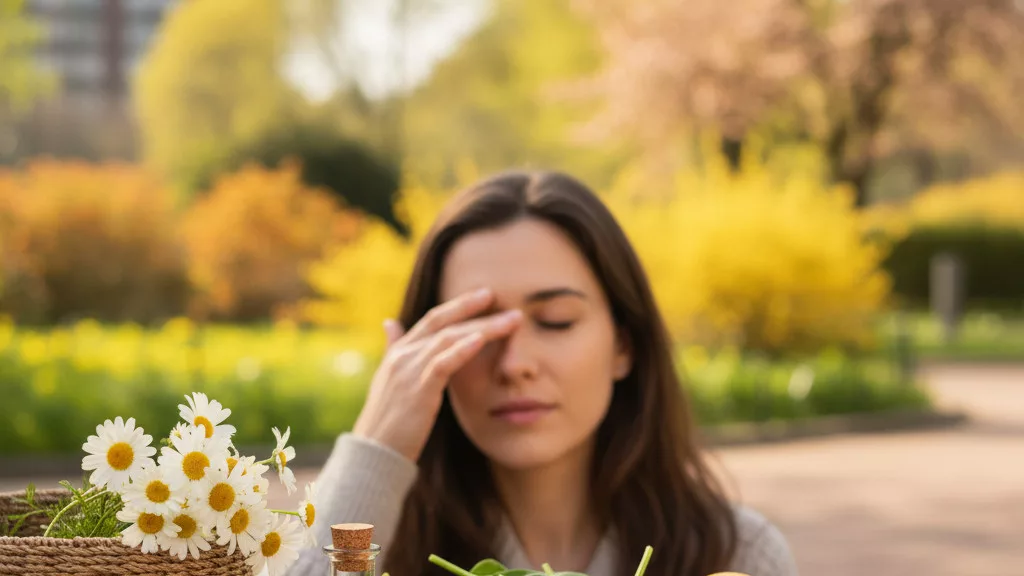
Introduction: The Influence of Allergy Season on Eye Health
With the arrival of spring, the eyes become particularly vulnerable to allergens, especially pollen. This phenomenon is known as pollen allergy and can manifest with annoying symptoms such as itching, redness, and tearing. But how can we combat these symptoms while restoring the health of our eyes?
In this article, we will focus on how nutrition and the use of natural remedies can help protect and improve eye health during allergy season.
Pollen Allergy: Symptoms and Causes
When pollen comes into contact with the conjunctiva, the membrane that covers the eyes, the body reacts by producing histamine. This causes a range of symptoms, including:
- Itching of the eyes
- Redness
- Excessive tearing
- Dryness and irritation
Symptoms can vary in intensity and duration depending on the amount of pollen in the air and individual sensitivity.
Foods to Consume to Alleviate Allergy Symptoms
Diet can play a crucial role in mitigating allergy symptoms. Some foods have anti-inflammatory and antioxidant properties that can help reduce allergic reactions. Here are some practical tips:
1. Fresh Fruits and Vegetables
Fruits and vegetables like blueberries, spinach, and carrots are rich in antioxidants and vitamins. You can start your day with a breakfast that includes blueberry smoothies (about 150 g) and a tablespoon of chia seeds.
2. Omega-3 Rich Fish
Consuming fish such as salmon and mackerel helps fight inflammation. It is recommended to eat fish at least twice a week.
3. Nuts and Seeds
Walnuts, almonds, and flaxseeds are great sources of omega-3 and can be added to salads or eaten as snacks (a handful a day).
Foods to Avoid During Allergy Season
Some foods can aggravate allergy symptoms. Here’s what to limit or avoid:
- Refined sugars: limit the consumption of sweets and sugary drinks.
- Processed foods: may contain additives that worsen allergic reactions.
- Alcohol: known to increase histamine production, so it’s best to reduce or avoid it.
You can start replacing sugary desserts with fresh fruit or natural yogurt to keep sugar levels in check.
Natural Remedies to Protect Eyes from Allergies
In addition to diet, there are several natural remedies that can help soothe allergic eye symptoms. Here are some solutions you might try:
1. Chamomile Compresses
Chamomile has soothing properties. Prepare an infusion and let it cool. Soak cotton pads and apply them to the eyes for 10-15 minutes.
2. Saline Washes
A saline wash can clean the eyes and remove pollen. You can do a wash twice a day, preferably in the morning and evening.
3. Castor Oil
Castor oil has moisturizing properties. Apply a drop of castor oil to the affected eye to relieve dryness and irritation. Make sure to use pure castor oil.
The Role of Hydration in Eye Health
Maintaining adequate hydration is essential for eye health, especially during allergy season. Water helps maintain eye moisture and dilute irritants. Try to drink at least 2 liters of water a day and consider increasing your intake during hot and dry days.
Supplements to Support Eye Health
In addition to a balanced diet, some supplements may be helpful:
1. Omega-3
Omega-3 supplements can help reduce inflammation. Consider taking a fish oil supplement, following the guidance of a health professional.
2. Vitamin C and Quercetin
These antioxidants can support the immune system and reduce allergies. You might opt for a 500 mg vitamin C supplement and quercetin, following the manufacturer’s instructions.
Maintaining a Healthy Environment for Your Eyes
In addition to diet and remedies, it is important to create an environment that reduces exposure to pollen. Here are some practices to adopt:
- Close windows during peak pollen hours (usually in the morning).
- Use air purifiers with HEPA filters.
- Shower and change clothes after being outdoors to remove pollen.
These simple measures can help keep your eyes fresher and less irritated.
Conclusion: Take Care of Your Eyes in Spring
Taking care of eye health during allergy season is essential. A balanced diet, the use of natural remedies, and maintaining a healthy environment can make a difference. Don’t forget to monitor your diet and adopt small measures to reduce pollen exposure.
We encourage you to try these tips and see how your symptoms change. Take care of yourself and your eyes, especially on high allergy days!



Comments
comments.cta_title
comments.cta_text
comments.login_cta
comments.empty_title
comments.empty_text