
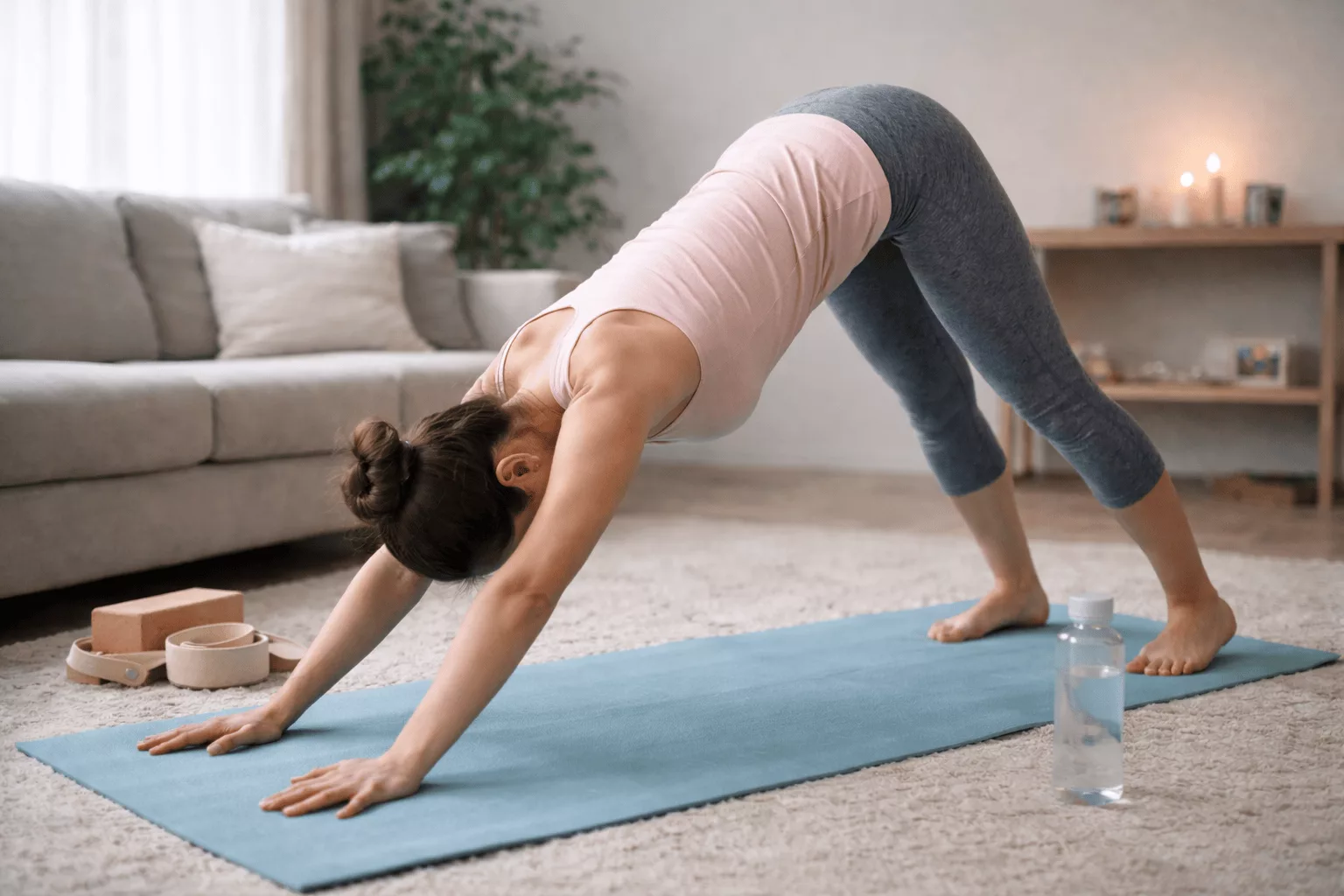
Why Start with Yoga
Yoga is an ancient discipline that unites body and mind through physical postures (asanas), breathing techniques (pranayama), and meditation. You don't need to be flexible to start: yoga adapts to every level and every body.
The Benefits of Yoga
- Flexibility: gradually improves joint mobility
- Strength: many poses require and develop muscular strength
- Balance: improves stability and proprioception
- Stress: reduces cortisol and tension through mindful breathing
- Posture: corrects imbalances from sedentary work
The 8 Fundamental Poses
1. Tadasana (Mountain Pose)
Standing, feet together, arms at your sides. The foundation of all standing poses. Activates postural awareness and alignment.
2. Adho Mukha Svanasana (Downward-Facing Dog)
Forms an inverted V with the body. Stretches the back, calves, and hamstrings. Strengthens arms and shoulders.
3. Virabhadrasana I (Warrior I)
Deep lunge with arms raised. Strengthens legs and core, opens the chest and hips.
4. Vrikshasana (Tree Pose)
Balancing on one leg with the opposite foot resting on the inner thigh. Improves balance and concentration.
5. Balasana (Child's Pose)
Resting position: knees on the ground, torso bent forward, arms extended. Relaxes the back and calms the mind.
6. Bhujangasana (Cobra Pose)
Lie face down, lift the chest with the arms. Strengthens the spine and opens the chest.
7. Setu Bandhasana (Bridge Pose)
Lie on your back, lift the pelvis. Strengthens glutes, back, and opens the chest. Great for those who sit all day.
8. Savasana (Corpse Pose)
Final relaxation lying on your back. Integrates the benefits of the practice and deeply relaxes body and mind.
20-Minute Routine
Practice each pose for 5-8 breaths, repeating the sequence 2-3 times. Always start and end with a few minutes of mindful breathing. Consistency is more important than perfection.


Comments
comments.cta_title
comments.cta_text
comments.login_cta
comments.empty_title
comments.empty_text